Cake Slice One Continuous Line
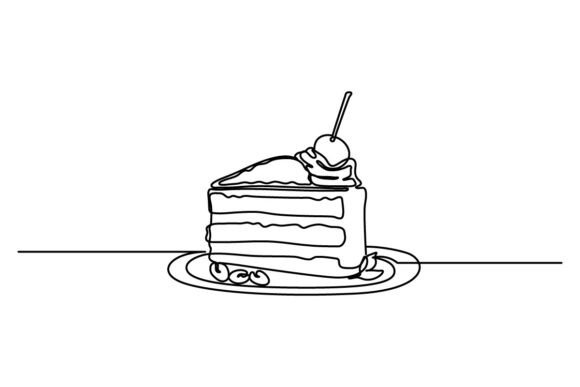
Some designs arrive with a quiet confidence. They do not shout, they do not clutter, and they do not try to be everything at once. Cake Slice One Continuous Line belongs to this rare category. It is a single flowing stroke that traces the familiar silhouette of a cake slice, finished with a tiny cherry on top and a few decorative dots that suggest celebration without overstating it. The composition is deliberately sparse, drawn on a clean white background, and the mood it creates is one of effortless charm. For anyone who works with food-themed embroidery, dessert-inspired merchandise, or bakery branding, this design immediately registers as a candidate worth testing.
What struck me first was how the continuous line approach gives the artwork a hand-drawn, personal quality. This is not a stiff vector icon meant to blend into a template. It feels like something a talented illustrator sketched in one uninterrupted motion, and that organic energy translates beautifully to projects where the maker wants to communicate warmth, authenticity, and a touch of whimsy. The decorative elements, small dots and subtle curves, frame the cake slice without distracting from the central shape. In a world where food-themed machine embroidery designs often lean too detailed or too cartoonish, this one lands in a sweet middle ground that feels modern and adaptable.
A Design That Whispers Instead of Shouting
When I evaluate a graphic for real embroidery use, I think about how it will live on fabric, not just how it looks on a screen. The Cake Slice One Continuous Line design has a lightness that makes it especially suited for projects where the embroidery should feel delicate and intentional. The continuous line structure means the stitching path could follow a natural flow, which matters enormously when you are planning stitch types, trims, and thread changes. A design with fewer isolated elements and a connected path tends to stitch cleaner, especially on smaller hoops or textured fabrics where constant jumps and trims can create mess.
The visual personality here is playful but not childish. It leans toward a cafe aesthetic, something you might see on a chalkboard menu outside a patisserie or printed on a minimalist greeting card. For embroidery designers and small business owners, this opens up a wide range of product possibilities. I can picture this on a linen tea towel, stitched in a single muted thread color, where the simplicity becomes the selling point. I can also see it on a craft fair apron, a tote bag for a bakery customer, or even a small embroidered patch that a handmade shop owner could stitch onto a denim jacket. The mood is versatile enough to cross over from casual everyday items to more curated boutique products.
Where This Design Feels Most at Home
In practical terms, the cake slice silhouette naturally belongs in food-related merchandise, but the continuous line style elevates it beyond a simple icon. It works beautifully on kitchen textiles like tea towels, oven mitts, and apron bibs. It would make a charming addition to a baby onesie or toddler shirt for a first birthday party, especially when stitched in a soft pastel thread. For Etsy sellers who specialize in personalized gifts, this design could be paired with a name or date underneath, turning a simple embroidered tote bag into a keepsake for a wedding, anniversary, or milestone celebration.
I recently tested a similar concept while preparing a custom embroidered tote bag for a client who runs a small bakery. She wanted something that felt hand-drawn and personal, not a generic cupcake clipart. The continuous line approach gave her branding a handmade, artisanal feel that her customers immediately connected with. When I look at Cake Slice One Continuous Line, I see that same potential. It is the kind of design that makes a product feel special without requiring the maker to do anything complicated. The design does the heavy lifting, and the finished product speaks for itself.
Thinking Through Fabric and Texture
No design works perfectly on every surface, and an honest assessment means talking about where caution is needed. Because the Cake Slice One Continuous Line design relies on a single flowing line with small decorative dots, it demands attention to fabric choice and stabilizer selection. On highly textured fabrics like terry cloth or chunky knits, the fine details, especially those tiny dots, could lose definition. The line work might become wobbly or broken if the fabric shifts during stitching. A good cutaway stabilizer and a topper on plush or napped fabrics would be essential to keep the details crisp.
Stretchy fabrics like t-shirt cotton or baby rib knits also require extra care. The continuous line might distort if the fabric stretches after stitching, pulling the cake slice shape out of proportion. Using a fusible stabilizer and hooping the fabric without stretching it can help, but it is worth testing on a scrap piece first. Dark fabrics present another consideration. The design comes on a white background, and while the file formats provided, EPS, SVG, and JPG, give you flexibility to recolor the artwork, the embroidery thread color choice on a dark base will make or break the visibility of those fine decorative elements. A thread that is too light might glare, and one that is too dark might disappear. Test swatches are not optional here. They are the difference between a product that looks professional and one that disappoints.
Small Hoop, Big Impact
One of the practical questions I always ask about a design is whether it can hold its own in a small hoop size. Not every project needs a large embroidery area, and many crafters work with compact machines that limit them to four-by-four-inch fields. The Cake Slice One Continuous Line design, with its minimalist composition and absence of dense fill areas, seems well-suited for smaller hoops. The continuous line structure means the overall shape can likely scale down without losing its identity, though the tiny decorative dots would need careful checking at reduced sizes. If they become too small, the thread might not form them cleanly, and they could turn into messy blobs rather than intentional accents.
For projects like baby embroidery, where small designs on bibs, booties, or tiny bodysuits are the norm, this design checks a lot of boxes. It is simple enough to read clearly at a glance, it has a theme that makes sense for children's items without being overly juvenile, and it can be stitched quickly, which matters when you are producing multiple pieces for a craft fair or a wholesale order. The key is to test the stitch density and thread weight before committing to a production run. A lighter thread and a slightly reduced density can help the fine details breathe.
From Digital File to Finished Product
It is important to note what you are actually getting with this purchase. The product description lists EPS, SVG, and JPG file formats. These are standard graphic formats, not stitch-ready embroidery files. For anyone who plans to use Cake Slice One Continuous Line in a machine embroidery project, you will need to digitize the design yourself or work with a professional digitizer to convert the artwork into a format your embroidery machine can read. This is not a flaw, it is simply the nature of the product category. The listing sits under Illustrations and Graphics, which means the files are intended as design assets for further creative use, not as finished embroidery files ready to load onto a machine.
For experienced embroidery designers, this is actually a benefit. You get full control over the digitizing process, which means you can decide on stitch types, density, underlay, and sequencing based on the specific fabric and project. You can choose to run the entire design as a single running stitch for a sketch-like effect, or you can add satin stitch accents to the cherry and decorative dots for a more polished look. The creative flexibility is yours, and the clean lines of the artwork make it a pleasure to digitize without excessive node cleanup or path simplification.
Commercial Use and Licensing Considerations
Before you stitch this design onto a sweatshirt for your Etsy shop or print it on a tea towel for a wholesale order, you need to confirm the licensing terms. The product description does not spell out whether commercial use is permitted, and assuming it is allowed without checking is a risk no small business owner should take. Reach out to the seller, read the license carefully, and understand what you can and cannot do with the finished products. This applies to both physical items like embroidered patches and tote bags, as well as digital products like printable mockups or design bundles you might sell to other makers.
For craft business owners who rely on a steady stream of seasonal merchandise, designs like Cake Slice One Continuous Line become valuable assets because they can be repurposed across multiple product lines. A single design can appear on a holiday tea towel, a birthday sweatshirt, a Valentine's Day tote, and a wedding favor apron, all without losing its appeal. The versatility comes from the understated style, which does not lock the design into a single holiday or event. That kind of range matters when you are building a cohesive brand and trying to maximize the return on every design purchase.
How Customers Respond to Simplicity
Over the years, I have noticed a pattern in buyer behavior that anyone selling handmade products should pay attention to. Customers gravitate toward designs that feel intentional and uncluttered. A cake slice drawn in one continuous line communicates care and taste in a way that a busy, overly detailed design does not. It suggests that the maker chose the design thoughtfully, not that they grabbed the first clipart they found. This perception of quality translates directly into higher perceived value, which means you can price your finished products accordingly.
For personalized gifts, the emotional connection matters even more. A customer ordering an embroidered apron for a friend who loves baking will feel more confident in their purchase when the design looks unique and handcrafted. Cake Slice One Continuous Line delivers that feeling. It does not look mass-produced, and it does not look like something that came from a generic design pack. The continuous line technique inherently suggests artistry, and that association transfers to the product and the brand behind it.
Practical Testing Before You Commit
I always recommend running a test stitch on fabric that closely matches the final product. Use the thread colors you plan to sell, apply the same stabilizer method, and wash the finished piece once or twice to see how the embroidery holds up. Pay attention to the small details. Those decorative dots and the cherry on top of the cake slice are the elements that give the design its personality. If they degrade after washing, the design loses its charm. If the continuous line develops gaps or puckering, the sketch-like quality turns into a flaw rather than a feature.
Testing on both light and dark fabrics is also wise, even if you think you will only use one colorway. The design originates on a white background, and the way it reads on a natural linen, a black sweatshirt, or a patterned fabric can vary dramatically. What looks crisp and airy on white might become harsh or invisible on a darker ground. A quick mockup in your embroidery software, or even a paper printout laid on the fabric, can give you a preview before you invest the thread and time.
The Right Thread, The Right Mood
Thread choice is where the personality of Cake Slice One Continuous Line really comes to life. A single strand of matte cotton thread in charcoal gives the design a sophisticated, letterpress-like quality that suits upscale kitchen linens and boutique aprons. A glossy rayon thread in a warm golden brown evokes the color of baked pastry crust and makes the cake slice feel almost edible. For baby items and nursery decor, a soft blush pink or sage green keeps the mood gentle and sweet. The design itself is a neutral canvas, and the thread color you select becomes the voice.
One trick I use with continuous line designs is to test the stitch in a variegated thread. The subtle color shifts along the single line add depth and a hand-drawn feel that customers often comment on. It is a small touch that can set your product apart in a crowded Etsy category or at a busy craft fair. The key is to keep the variegation subtle. Too much contrast, and the continuous line breaks visually, losing the elegant flow that makes the design special.
Final Thoughts Before the First Stitch
Cake Slice One Continuous Line earns its place in my design library because it understands restraint. It does not try to impress with complexity, and it does not rely on trends that will fade. The continuous line style has a timeless quality that works across seasons, holidays, and product types. For embroidery designers, small business owners, and handmade shop owners, that kind of staying power is exactly what you want from a design asset. You invest once and use it repeatedly, knowing that the finished product will look intentional and appealing to customers who value craftsmanship.
Before you add it to your next project, check the file formats against your workflow, confirm the licensing terms for commercial use, test it on your chosen fabric, and choose a thread color that speaks to the audience you are trying to reach. These steps are not busywork. They are the foundation of a product that sells and a brand that customers trust. The design itself is ready. The rest is up to you.