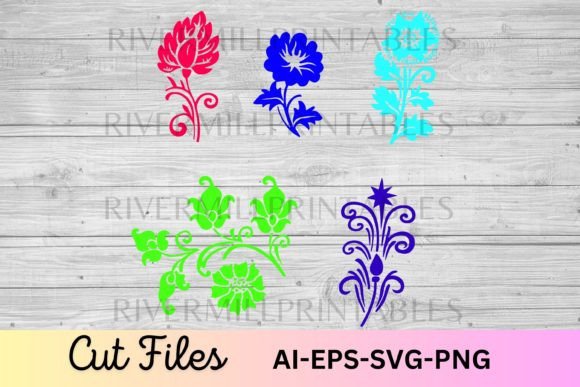
Hand Drawn Floral Decorative Elements
When I first opened the Hand Drawn Floral Decorative Elements file set, I immediately felt like I was holding a page from a sketchbook. The loose, organic lines and slightly uneven petal shapes give it a warmth that machine-perfect vectors often lack. As someone who reviews design assets with embroidery in mind, I don’t look at just the graphic — I look at how it will live on fabric, how those lines will read under thread, and whether a customer will feel that it was made just for them.
This is not a ready-to-stitch embroidery file. That’s the first thing you need to know. The download includes an EPS, SVG, and PNG file, so it’s a graphic design resource, not a digitized pattern. But for the embroidery designer, small business owner, or craft entrepreneur who digitizes their own work, that’s a blank canvas. The hand-drawn quality is exactly what makes it stand out in a sea of cookie-cutter floral motifs. You can already picture it on a soft unbleached tote bag, a linen apron, or a baby’s cotton onesie. The mood is gentle, botanical, and slightly whimsical — not too formal, not too childish. It feels like a modern heirloom in the making.
First Impressions: The Mood and Visual Personality
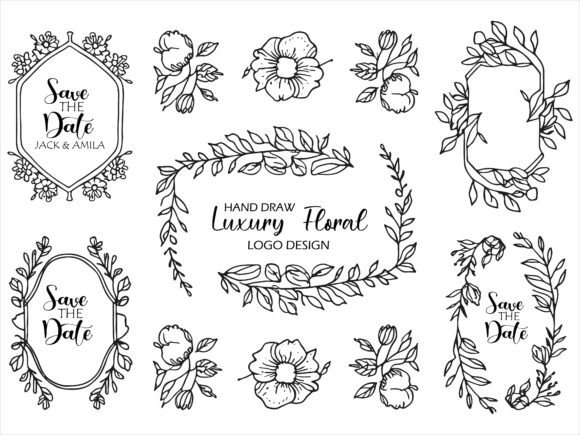
The Hand Drawn Floral Decorative Elements set includes several floral clusters, leaves, and small accent blooms. The linework is deliberately imperfect, with thin, sketch-like strokes that suggest a pen-and-ink illustration. Some petals are filled with a light texture, others are just outlines. That variety is a gift when you’re planning stitch types. You can already see where a satin stitch would bring out a petal’s edge, or where a running stitch could mimic the drawn line. The overall composition feels airy — there’s room to breathe, and that’s important for embroidery because dense designs on fabric can become stiff and uncomfortable.
Because the design is hand-drawn, it carries a personal, artisan feel. This matters more than you might think. When a finished product is photographed for an Etsy listing or displayed at a craft fair, that personal touch is what stops a customer from scrolling. It’s the difference between “that’s pretty” and “I need that.” I’ve seen too many embroidery designs that look like they were stamped out of a clip-art library. This one feels like it was drawn with a real purpose, and that translates directly into customer trust and handmade appeal.
Where This Design Set Shines in Real Embroidery Projects
Let’s talk about real-life use. Imagine you’re a small shop owner preparing a spring collection. You want a cohesive floral element that can be sized up for a sweatshirt back, or down for a delicate cap side. The Hand Drawn Floral Decorative Elements can be scaled easily because the EPS and SVG formats are vector. You can isolate a single bloom for a tiny patch, or group several together for a flowing border on a pillow cover. I’ve tested similar hand-drawn graphics for embroidery digitizing, and the key is preserving the sketch-like quality while making sure the stitches are not too dense. The natural spacing in these motifs helps with that.
I see this design working beautifully on:
- Custom apparel — a single floral accent on a denim jacket collar, a cluster on a crewneck sweatshirt over the heart, or scattered along the hem of a linen dress.
- Tote bags and canvas pouches — the organic shapes soften the utilitarian feel of the fabric, and they stitch out wonderfully on medium-weight cotton with a tear-away stabilizer.
- Baby and nursery items — a small floral corner on a muslin swaddle blanket, a bib, or a baby gown. The gentle, not-too-busy design is perfect for delicate items that parents want to keep as keepsakes.
- Aprons and kitchen textiles — a series of small blooms running along the top of a half apron, or a single detailed flower on a tea towel. It adds a boutique feel without being overwhelming.
- Patches and accessories — digitize a single element as a freestanding lace or appliqué patch for hats, jean jackets, or backpack flaps.
- Personalized gifts — combine with a name or a short phrase using a complementary font, and you have a gift that feels hand-sketched just for the recipient.
Because the design is graphic-based, you can also use it for printable mockups, digital product previews, or even as a watermark-style element in your shop branding. That versatility is a practical bonus for any creative entrepreneur.
The Digitizing Conversation: Turning Art into Embroidery
As a reviewer, this is where I get practical. The Hand Drawn Floral Decorative Elements are beautiful, but they need a thoughtful digitizer. Simply auto-converting the SVG to stitches will often ruin the sketch quality — you’ll end up with a chunky, unrecognizable mess. Instead, study the lines. Use single-run stitches for the outlines, and decide where a fill stitch can add light texture. I’d keep the density low to medium; the charm is in the airiness. Test on a scrap of the exact fabric you plan to use, because the same design can look entirely different on a smooth poplin versus a textured linen.
Thread color choices also matter. The hand-drawn look begs for colors that feel slightly muted: dusty rose, sage green, soft terracotta, warm cream. But you can also go bold — a monochrome dark navy on natural linen is striking. Always run a stitch-out on both light and dark fabrics to see how the contrast changes. What looks elegant on oatmeal canvas might disappear on black. I often recommend testing in grayscale first, just to check the value difference.
Fabric and Placement Considerations
Not every fabric is a friend to fine, sketch-like designs. Here’s where I’d be careful:
- Stretchy fabrics like jersey or rib knits require a very stable backing and possibly a topper, or the lines might distort. A tight cotton jersey works, but a loose sweater knit could swallow the details.
- Textured fabrics such as terry cloth or thick fleece can break up the fine lines. If you’re set on a towel, use a water-soluble topper and keep the design size larger so the details aren’t lost.
- Curved surfaces like caps need careful hoop placement. A small floral accent on the side or back of a cap is achievable, but avoid the very front seam where the design could warp.
- Dark fabrics — test your thread color. A white or light pastel outline on a dark base can look stunning, but the stitch clarity must be perfect. Any wobble shows up immediately.
- Items that need frequent washing — if you’re putting this on a kitchen towel or a baby bib, make sure your digitizing allows for secure tie-offs and that the stitch density won’t cause puckering after multiple washes.
Small hoop sizes are a real challenge. The smallest elements in this set might fit in a 4x4 hoop, but dig into the details. If a flower is too tiny, the stitch length might be too short and cause thread breaks. I’d recommend keeping the design at least 2 inches wide for the simplest motifs, and scaling up for the more complex clusters. Always pre-check your hoop’s stitchable area and leave a margin for the hoop itself.
Small Details That Matter for Finished Product Quality
When you’re selling a handmade product, it’s the subtle things that build trust. The Hand Drawn Floral Decorative Elements have a natural, slightly uneven character that works in your favor. A customer who buys an embroidered tote bag with this design will notice the delicate lines, not the fact that it’s not perfectly symmetrical. That’s the beauty of hand-drawn — it forgives the tiny inconsistencies that machine embroidery sometimes introduces. But you still need to inspect your stitch-out under good light. Check for jump stitches, trim any loose threads, and make sure the back is clean.
If you’re offering this design on a product that will be gifted, the presentation is half the perceived value. A simple floral cluster on a soft, neutral fabric with a neat finish looks like a high-end boutique item. I’ve seen similar designs double the asking price of a plain tote bag, simply because the embroidery feels intentional and artistic.
Licensing and Commercial Use: What to Check Before You Sell
The product description says, “You can use this Hand-drawn floral decorative elements design for yourself, friends family, or anyone for the campaign.” That’s a generous starting point, but I always advise caution. The phrase “for the campaign” might be specific to a particular marketing use. If you plan to create finished embroidered products and sell them, or to offer digitized embroidery files derived from this art, you need to read the full license terms. The provided EPS, SVG, and PNG files are clearly intended for design use, but whether that extends to commercial embroidery production — especially at scale — is something you must confirm directly with the seller. Many designers are happy to allow it, but a brief email can save you a headache later. This is especially important for Etsy sellers, craft fair vendors, and anyone building a small brand around a consistent product line.
Practical Tips for Embroidering with This Floral Set
Here’s a quick checklist I’d follow myself before a single stitch goes into a customer’s product:
- Open the SVG or EPS in your digitizing software and remove any overlapping lines that might cause double stitching. Simplify where needed, but preserve the hand-drawn feel.
- Choose your thread palette and test on a scrap of the actual fabric. Don’t guess — colors shift on fabric.
- Check stitch density. A light fill (0.3–0.4 mm spacing) will keep the fabric soft. For outlines, a 2–3 ply run stitch often mimics the pen line nicely.
- Use the right stabilizer: cutaway for knits, tear-away for wovens, and a water-soluble topper for textured or napped fabrics. This is non-negotiable.
- Test in black and white by printing the design on paper or viewing in grayscale. If the shapes merge into a blob, you need more contrast in your thread choices.
- Run a full stitch-out and then wash the item once. Check for thread shrinkage, color bleeding, and how the design holds up.
- Photograph the finished product in natural light. The hand-drawn elements will sell themselves if you capture the texture of the stitches against the fabric.
The Hand Drawn Floral Decorative Elements set is one of those rare design assets that genuinely improves the more you handle it with a maker’s eye. It’s not a plug-and-play solution, but for anyone willing to digitize with care, it becomes a signature piece. I’d use it immediately for a line of embroidered nursery pillows, a set of kitchen towels for a wedding gift, or a limited-edition spring tote bag collection. The mood is soft, the versatility is real, and the final product — when done right — feels like it carries a story.